
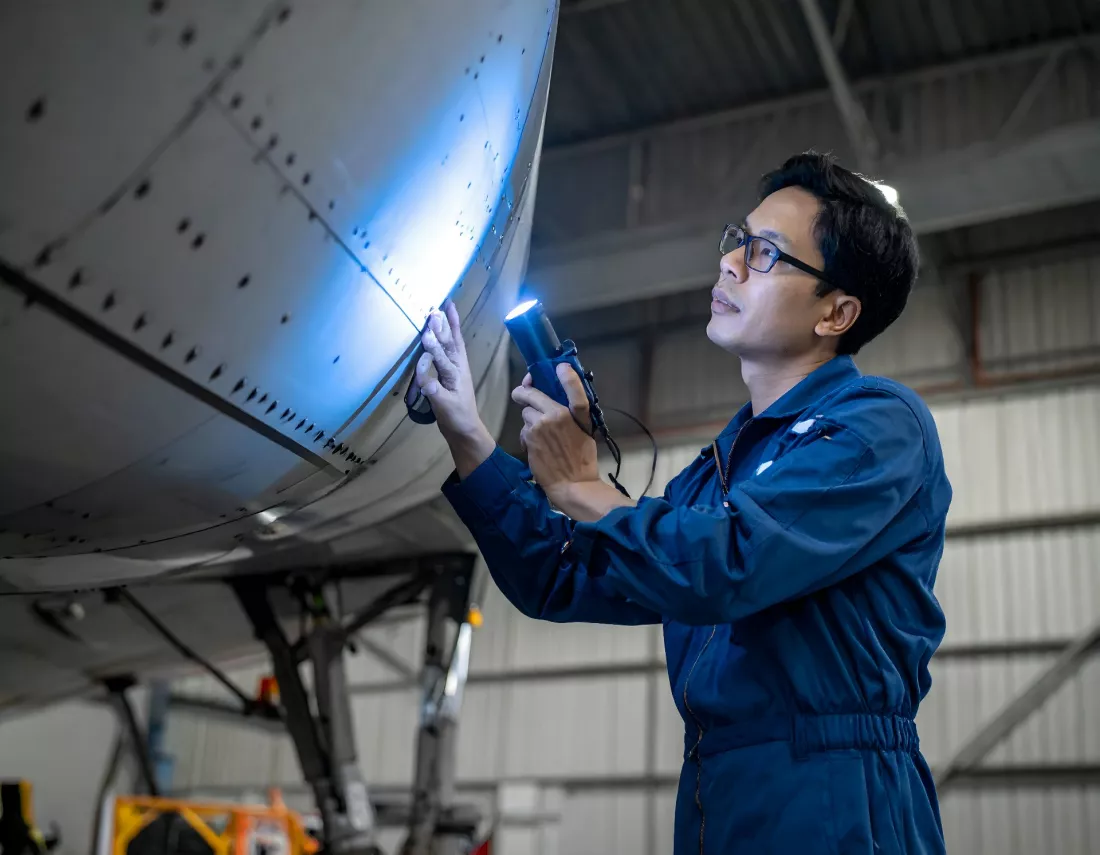
Aviation’s environmental impact is not only about emissions in the air but also about waste: retired aircraft, expired materials and disposed parts. The EU-funded GENEX project looked for ways to make aircraft components last longer. The team combined recyclable composites, sensors feeding a digital twin and digitally assisted repairs – and at the end, you can check how well you look after your own things.
When people talk about aviation’s environmental impact, they usually mean emissions from aircraft in flight. But the problem is wider. The sector also generates a lot of waste: retired aircraft, expired materials and disposed parts.
There is some good news too. Up to 90% of an aircraft’s weight can be reused or recycled. The real question is how to design, build and repair components so that they last as long as possible.
That question was at the heart of GENEX, an EU-funded project coordinated by the Technological Institute of Aragon (ITA) in Spain. It brought together 15 partners from academia and the aviation industry.
“Reducing aviation emissions starts with designing more efficient, longer-lasting parts and components, which is exactly what the GENEX project set out to achieve,” says Andrea Calvo Echenique, a researcher at ITA.
The team was guided by an advisory board of aviation experts, which helped it focus on technologies that are relevant to the sector and can realistically be certified.
GENEX worked on advanced composite manufacturing using recyclable resins and out-of-autoclave automated fibre placement. The composites were fitted with digital sensors that monitor the health of aerostructures.
The data from these sensors feeds a digital twin of the structure. It can then be used for damage detection, modelling the lifespan of a part and implementing predictive maintenance. As Calvo Echenique puts it: “The net result is a longer-lasting component.”
The project also developed digital solutions for repairs:
“Digitalising repair improves results, allowing for faster and more reliable repairs and thus reducing downtimes and increasing an aircraft’s airworthiness,” Calvo Echenique explains.
GENEX delivered interconnected processes that cover a component’s whole life, from design through to end-of-life management.
“By developing sustainable materials, low-energy manufacturing processes and digital technologies for expanding a component’s lifespan, GENEX is helping reduce an aircraft’s CO2 footprint,” she says. The work continues in follow-up Horizon Europe projects, TOSCA and CompSTLar.
GENEX shows that greener aviation is not only about engines and fuel. It is also about materials engineering, sensors, data analysis and maintenance planning – fields where mechanical engineers, computer scientists and composite specialists work side by side.
The advisory board mattered for a simple reason: in aviation, a technology is only useful if it can be certified. By quickly filtering out irrelevant ideas and those that could never be certified, the consortium was able to spend its time on the solutions with the greatest added value for the sector.
Aviation’s footprint starts long before take-off, when parts are designed and manufactured. GENEX combined recyclable-resin composites, sensors feeding digital twins and digitally assisted repairs. The result is longer-lasting components, shorter downtimes and a smaller CO2 footprint for aircraft.
5 questions · one minute


 EN
EN 
 CS
CS DE
DE ES
ES FR
FR HU
HU IT
IT PL
PL PT
PT РУ
РУ SK
SK TR
TR УК
УК AR
AR 中文
中文