
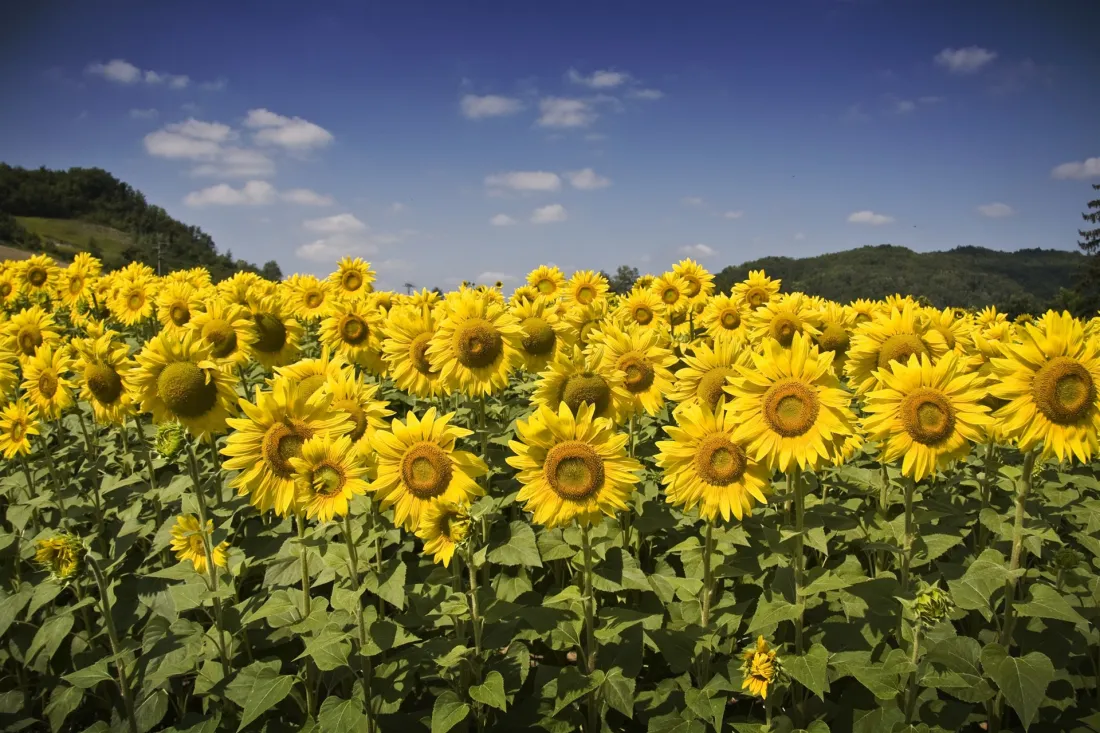
Record-breaking heatwaves, droughts and wildfires in the summer of 2026 showed that the impacts of climate change are now a matter of security and the economy, not just the environment. The EU’s Results Pack presents 14 projects from the Horizon programme that offer tested solutions, from coastal forecasts to drought-tolerant sunflowers. See how they work – and at the end take a short test to check how much you remember.
According to a review prepared by CORDIS, Europe is entering a new climate reality, and the summer of 2026 offered a stark preview of it. Record-breaking heatwaves, widespread drought and intense wildfires disrupted water supplies, agriculture, energy and many other areas of the economy. The authors stress that such extremes are not isolated accidents. They are reshaping the environment, the economy and society across the whole continent.
That is why climate resilience is no longer solely an environmental goal. It is increasingly treated as one of the foundations of public safety and economic security. Investments in adaptation can save lives, reduce losses, protect jobs and safeguard business continuity. They also help minimise disruptions to the supply chains that today connect companies across Europe and beyond.
Climate policy distinguishes between two kinds of action. The first is cutting greenhouse gas emissions so that climate change progresses more slowly. The second is adaptation: preparing people, cities, infrastructure and the economy for impacts that are already being felt or can no longer be avoided. Adaptation includes, for example, flood warning systems, greenery that cools streets and crops that cope better with drought.
The European Union adopted its EU adaptation strategy in 2021. The strategy highlights the need to accelerate smart adaptation across all sectors of the economy. This ambition is reinforced by the EU integrated framework for climate resilience. It is meant to help Europe anticipate, manage and reduce climate risks in a proactive and systematic way, rather than only once a crisis is already under way.
According to the authors of the review, the transition to a climate-resilient economy is also an opportunity for innovation and for strengthening Europe’s competitiveness. Demand is growing for solutions that make it possible to anticipate risks and cope with them better. The review lists several areas in which this is creating new markets for European knowledge and technologies:
Europe’s flagship Horizon research and innovation programme is helping to deliver a new generation of market-ready solutions. The EU Mission on Adaptation to Climate Change accelerates their uptake in close cooperation with local and regional actors. Further support comes from the EU startup and scaleup strategy, which aims to make the EU the preferred place for founding and growing technology-driven innovative companies.
Effective adaptation starts with accurate and trusted climate information. The Climateurope2 project is developing European standards for climate services, so that it is clear what a high-quality service should offer. The CoCliCo team, in turn, translates sea level rise projections into intuitive coastal risk tools. This supports long-term planning and investment decisions in Europe’s most exposed regions.
When an extreme event strikes, time and good preparation matter most. The RISKADAPT project gives authorities models that help identify weak points in infrastructure and decide what to invest in first. The GOBEYOND team is building next-generation warning systems. They communicate not only the hazard itself but also where its impact will be felt most. The SILVANUS project provides a digital forest fire management platform that helps prevent, detect and suppress escalating wildfires.
Fun fact: Five of the 14 projects described in the review were funded under the EU Mission on Adaptation to Climate Change. They are IMPETUS, MountResilience, RESIST, RISKADAPT and TransformAr.
Both the impacts of climate change and the ways of dealing with them are local. The risk in a mountain valley looks different from the risk in a large coastal city. The IMPETUS and MountResilience projects supported the development of solutions tailored to local needs. They also built tools for sharing the insights gained, so that other local authorities can take similar action. The RESIST project pairs vulnerable regions so that they can validate solutions together and scale them up.
As temperatures rise, so do the problems of water management. Drought affects farmers, cities and industry, and water is becoming a resource that has to be managed with much greater care. The review describes four projects that are looking for answers:
Water reuse means that treated water, for example from municipal wastewater, is used a second time, such as for irrigation. Nature-based solutions, in turn, are measures that make use of plants, soil and water instead of relying solely on concrete and technology. Examples include trees and green spaces that lower the temperature in a city during heatwaves.
Some challenges require more far-reaching change than a single investment. The NATURANCE project team is exploring how insurance could move from compensating losses to preventing them. Today an insurer usually pays out once the damage has already happened. If it starts encouraging measures that reduce risk, fewer losses may occur in the first place. The TransformAr project, in turn, demonstrates ways to foster transformative adaptation pathways and to encourage investment in nature-based solutions.
According to the authors of the review, the 14 Horizon-funded projects together form a portfolio of solutions ready to be replicated, scaled and deployed elsewhere. They range from services and advanced decision-support tools to enabling frameworks such as standards and financing conditions. They are meant to help protect people and prosperity, strengthen Europe’s economic security and position the continent as a front runner in the growing global market for climate resilience solutions.
Climate adaptation is a field where many specialisms meet. It needs climatologists and hydrologists, environmental and civil engineers, and specialists in crisis management and internal security. There is also room for urban planners, landscape architects, agronomists, economists and data analysts, and even insurance specialists. People who choose such degree programmes may one day design warning systems, plan green spaces in cities or advise local governments on how to protect residents.
The summer of 2026, with its record-breaking heatwaves, droughts and wildfires, showed that climate resilience is now a matter of security and the economy. An EU review presents 14 projects from the Horizon programme that help anticipate risks, improve warnings, manage water and protect forests and cities. Their solutions are ready to be replicated in other regions, and the growth of this field is also creating new markets for European knowledge and technology.
5 questions · one minute


 EN

 CS
 DE
 ES
 FR
 HU
 IT
 PL
 PT
 РУ
 SK
 TR
 УК
 AR
 中文