
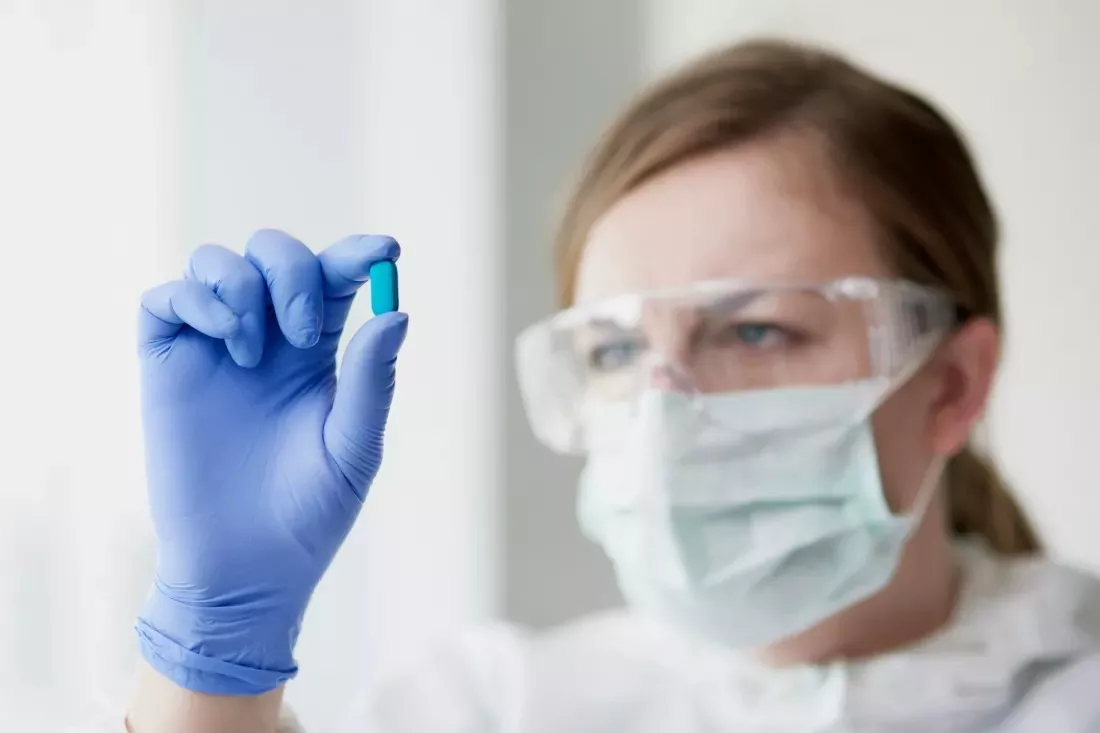
A pill that checks how your gut is doing, then simply gets digested like a meal, sounds like science fiction. Yet the EU-supported ELFO project, run at the Italian Institute of Technology from 2020 to 2025, built exactly this kind of electronics from honey, toothpaste pigment, seaweed and red cabbage juice. The aim is safer, more sustainable devices that could one day replace some invasive procedures — and at the end you can check whether you would trust a pill with a sensor.
Ingestible devices offer a non-invasive way to look inside the body. Swallowed like an ordinary pill, they can track pH, body temperature and other physiological parameters in real time, which reduces the need for invasive procedures.
That is the promise. The reality, according to the team behind the EU-supported ELFO project, is a bit more complicated.
Today’s ingestible devices contain materials that are hazardous to patients and harmful to the environment once the devices are thrown away. That has practical consequences for medicine, too. As project coordinator Mario Caironi from the Printed and Molecular Electronics Laboratory at the Italian Institute of Technology puts it: “Administering most current ingestible devices must be supervised for safety, resulting in missed opportunities for mass health screening programmes.”
In other words, if every swallowed sensor needs a professional keeping an eye on it, it is hard to use such technology on a large scale.
ELFO, short for “Electronic Food: enabling edible electronic systems for biomedical and food monitoring applications”, set out to solve this by building edible electronics from food materials. The project was funded by the European Research Council under Horizon 2020 and ran from 1 September 2020 to 31 August 2025, with an EU contribution of €1,980,000.
The idea is simple to state and hard to pull off: devices that do their job and then disappear without a trace. Caironi explains: “After performing their function, these electronics can be naturally digested or even metabolised, with no e-waste.”
The researchers began by building a library of candidate materials that have useful electronic properties and are easily processed by the body. To decide what was worth considering, they were guided by regulators such as the European Food Safety Authority and the US Food and Drug Administration.
Next, the team optimised the materials so they could act as conductors, insulators or semiconductors – the basic building blocks of any electronic circuit. Then came the crucial step: testing them in simulated gastric and intestinal fluids, to make sure their properties were retained inside the body and not just on the lab bench.
Some of the results surprised even the scientists. “It was very exciting to see how some exotic materials worked unexpectedly well. Honey turns out to be great for gating transistors, and toothpaste pigment offers an excellent stable semiconductor,” says Caironi.
Using low-temperature, liquid-based techniques such as inkjet printing, the team produced a whole set of edible components:
From these components the project built two demonstrators. The first is a smart pill designed to monitor gastrointestinal health. The second is a food sensor that tracks the safety and quality of food rather than the condition of a patient.
Every electronic device needs power, and that was another challenge ELFO took on. The team developed what it describes as the world’s first edible rechargeable battery. Its ingredients read more like a recipe than a parts list: riboflavin, quercetin (a yellow pigment found in onions), nori seaweed, activated carbon, edible gold and saltwater.
The invention drew attention well beyond the lab – TIME magazine named it among the best inventions of 2023. Caironi sums up the progress: “We progressed the edible battery to a level where it can power most ingestible devices, while the food sensor can record when food is thawed and then refrozen, indicating that it has become unsafe for consumption.”
That second part matters for anyone who has ever wondered whether a bag of frozen vegetables survived the trip home from the supermarket.
The work does not end with ELFO. A follow-up project called EAT, also supported by the European Research Council, is taking the research further. “EAT aims to realise the first fully edible pill for measuring stomach emptying time, relevant to nutritionists for studying satiation. We aim to make this edible pill a platform for embedding more sensors for other uses in the future,” says Caironi.
If it works, a single swallowed pill could tell researchers how quickly food leaves the stomach – and later carry other sensors as well.
The ELFO project, coordinated by the Italian Institute of Technology between 2020 and 2025, showed that electronics can be made from food: honey, toothpaste pigment, beta-carotene, chitosan, gold leaf and red cabbage juice. The team tested its materials in simulated digestive fluids, built a smart pill for gut health and a food sensor that spots thawed and refrozen food, and created an edible rechargeable battery named among TIME’s best inventions of 2023. The follow-up EAT project is working towards a fully edible pill that measures stomach emptying time.
5 questions · one minute


 EN
EN 
 CS
CS DE
DE ES
ES FR
FR HU
HU IT
IT PL
PL PT
PT РУ
РУ SK
SK TR
TR УК
УК AR
AR 中文
中文