
One in four people in the European Union lives in a rural area, and those areas cover three quarters of its territory. It is there that women working in agriculture come up with small local businesses, from handmade soap to an educational farm. The EU-funded GRASS Ceiling project looked at what helps them and what holds them back, and its findings are useful for anyone thinking about a business of their own — and at the end you can check how much of an entrepreneur you have in you.
The numbers are striking: rural areas make up 75% of the territory of the European Union and are home to 25% of its population. The European Commission’s initiative for a rural vision stresses that these areas need diverse, inclusive communities in which everyone is encouraged to reach their full potential. Yet there is a group whose potential has often been overlooked for years: women working in agriculture.
They are the focus of the EU-funded GRASS Ceiling project, coordinated by South East Technological University in Ireland. Its aim was to invest in the innovations that women in agriculture come up with and carry out, and so to support women entrepreneurs.
The researchers noticed that women-led innovations in the countryside share a common character. As a rule they are not big investments but ideas tailored to the surrounding area. Most often they are ventures that are:
This is a farm-to-fork approach: a product is made close to the place where someone will later buy it and use it. Such small, locally focused innovations are positive examples of sustainable agriculture.
The trouble begins with money. Project coordinator Sally Shortall puts it plainly: “Women find it hard to access small pots of money to get started. Some are looking to generate self-employment or employment for one to three people, and most available finance for entrepreneurs focuses on initiatives that will generate high income, employ over 10 people and be export focused.”
In other words, most funding for entrepreneurs goes to initiatives promising high income, many jobs and exports. A micro-business making soap or ice cream simply does not fit those criteria, even if it is exactly what the local community needs.
The GRASS Ceiling team set out to test in practice how such ventures can be supported. The project coordinated nine living labs in nine countries: Croatia, Ireland, Italy, Lithuania, the Netherlands, Norway, Scotland, Spain and Sweden. Each lab was facilitated by an academic partner and a relevant stakeholder organisation, which recruited six to eight women for it. All the labs followed a similar programme for developing entrepreneurship.
One interesting element of the experiment was paying the participants. “We paid the women a daily rate to signal we valued their time as entrepreneurs. Women really appreciated this, and some told us it enabled them to justify being away from family responsibilities to attend the living lab,” says Shortall.
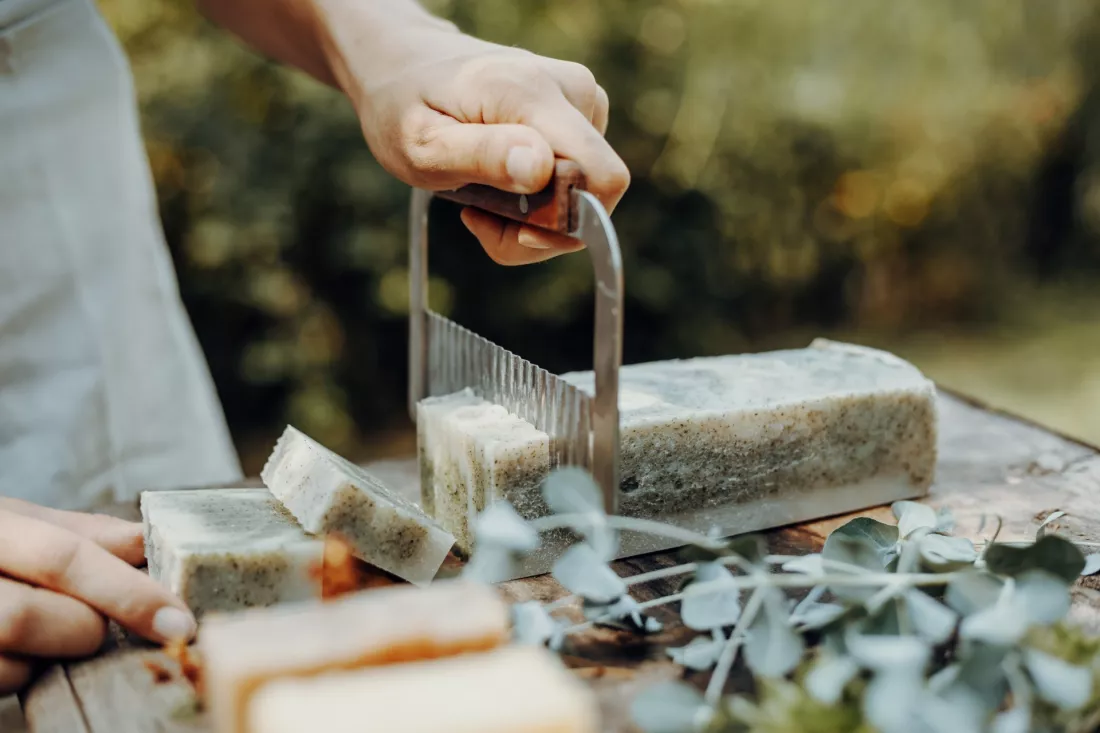
The ideas supported by the project were very concrete. They ranged from the creation of a natural soap company and the takeover of a shuttered local ice cream parlour to the plan for an educational farm. In one case the innovation stemmed from a very personal source: the aim of creating a soap gentle enough for a daughter’s sensitive skin.
The best-known example is Gail Daniels, an Irish rural entrepreneur with deep roots in her community. She created Bó Bar Soap, a company that produces natural, handmade soap using cow’s milk sourced directly from her family farm.
The project also revealed a less obvious obstacle. Many of the women who took part in GRASS Ceiling shared that they were repeatedly told they were not entrepreneurs. Such comments have consequences: they undercut efforts to attain needed funding as well as the confidence necessary to pursue innovations.
That is why Shortall hopes to see local enterprise offices offer greater support to micro-enterprises. In her view, government policies must also meet the needs of these women, particularly the next iteration of the common agricultural policy.
The story of GRASS Ceiling touches several fields at once: rural sociology, economics, management and public policy. It shows that innovation does not have to mean a start-up with a multimillion valuation. Sometimes it is a soap made from the milk of your own family farm, or the takeover of a local ice cream parlour. The project is also a reminder that the way funding is designed decides who gets a chance to begin at all.
Women in rural areas create small, local ventures that make good use of resources, yet they often run up against a funding system geared towards large businesses. The GRASS Ceiling living labs showed that it helps to value their time and to give real support to micro-enterprises. Summing up the project, Sally Shortall says that “GRASS Ceiling has shown what an asset women are to agriculture and to rural development,” and adds that women are “innovative, forward-looking, with a focus on sustainability and regenerative practices.”
5 questions · one minute


 EN

 CS
 DE
 ES
 FR
 HU
 IT
 PL
 PT
 РУ
 SK
 TR
 УК
 AR
 中文