
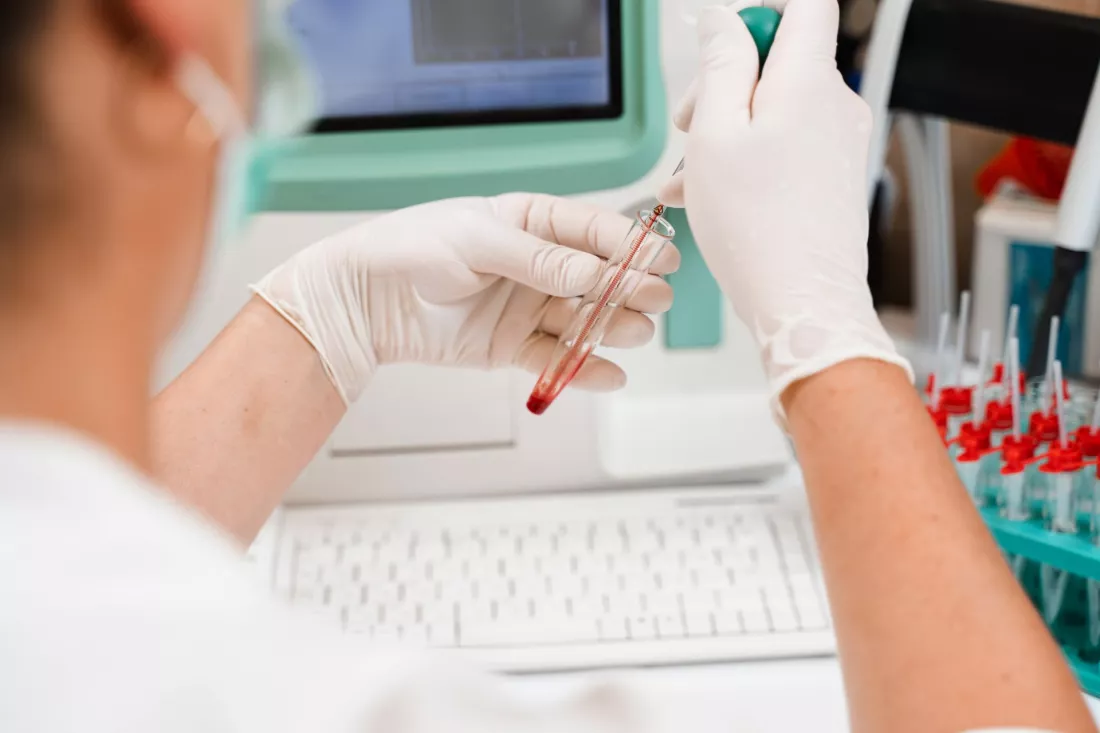
After a kidney transplant, the dose of immunosuppressive drugs has to be just right: too little and the new organ is rejected, too much and the patient is exposed to dangerous infections. A European project has tested whether a harmless virus that almost everyone carries in their blood can act as a gauge of the immune system and help doctors find the balance – and at the end you can check how good you are at finding the happy medium yourself.
For people with end-stage renal disease – the final, irreversible stage of chronic kidney disease – a kidney transplant is the gold standard of treatment. Yet the procedure is more complicated than simply swapping one organ for another. When the body receives a new kidney, the immune system registers it as a foreign entity that has to be destroyed.
To hold back this attack, doctors prescribe immunosuppressive drugs. The catch is that these medicines only work when they are given in the right amount.
Too little of the drugs, and the new kidney is rejected. Too much, and the immune system is weakened, which raises the risk of infection – or even death. Gregor Bond, an associate professor at the Medical University of Vienna, describes both sides of the problem: “While graft rejection due to insufficient immunosuppression is the leading cause of transplant dysfunction, infectious disease due to reduced immunocompetence is a common cause of death in transplant recipients with a functioning graft.”
In other words, a transplant can fail because the body fights it, but patients whose new kidney works perfectly well may still die of infections. Bond draws a clear conclusion: “Therefore, optimising the immunosuppressive regimen to simultaneously reduce rejection and infection is crucial to prolonging patient and graft survival.”
The trouble is that physicians have no crystal ball to show them where the right balance lies. What they do have is a virus.
It is called the torque teno virus, or TTV. It is a newly discovered virus that does not cause disease, and it occurs naturally in the blood of almost every healthy person – as well as in kidney transplant recipients. That makes it a candidate for an unusual job: a natural “immune-ometer” that reflects how strong the immune system is.
Research by the EU-funded TTV GUIDE TX project, which Bond coordinates, links the amount of the virus in the blood to the state of the immune system. The logic works like this:
“We believe that the quantification of the TTV load in a patient’s blood can help optimise the immunosuppressive drugs prescribed and thus reduce the risk of both infection and kidney rejection,” Bond explains.
To find out whether the idea holds up, the project tested TTV-guided dosing of immunosuppressive drugs in a clinical trial. Hundreds of kidney transplant recipients from across Europe took part.
The first answer concerns safety. “This trial showed that TTV-guided immunosuppression is safe in adult, stable and low-risk kidney graft recipients in the first year post kidney transplant,” says Bond.
The data point in a further direction, too. According to the results, TTV-guided immunosuppression can make the use of immunosuppressive drugs more personalised – and, in doing so, reduce drug doses.
The trial is not the only outcome. TTV GUIDE TX leaves behind a completed proof-of-concept trial that other research groups can build on directly. It also delivers a validated, standardised biomarker assay that is ready to be deployed in the clinic, along with a substantial biobank resource. On top of that, the team has gathered empirical data on the ethical, legal and societal issues of taking part in a trial and giving consent.
Showing that a method is safe is one thing; showing that it works is another. The research team now plans to take a deep dive into the data generated during the project. The goal is to understand how best to design a phase III trial – one that will test the efficacy of TTV-guided immunosuppression.
Bond sees the bigger picture. “Our project represents an important first step to introducing TTV guidance into routine clinical care, where it has the potential to reduce thousands of infections and kidney transplant rejections every year,” he concludes.
After a kidney transplant, doctors have to steer between rejection and infection, and the right dose of immunosuppressive drugs is hard to find. The TTV GUIDE TX project suggests that a harmless virus present in almost everyone’s blood can act as a natural gauge of the immune system. A trial involving hundreds of patients across Europe showed that TTV-guided dosing is safe for adult, stable, low-risk recipients in the first year after the transplant. Whether it is also effective is the question a phase III trial will have to answer.
5 questions · one minute


 EN
EN 
 CS
CS DE
DE ES
ES FR
FR HU
HU IT
IT PL
PL PT
PT РУ
РУ SK
SK TR
TR УК
УК AR
AR 中文
中文