
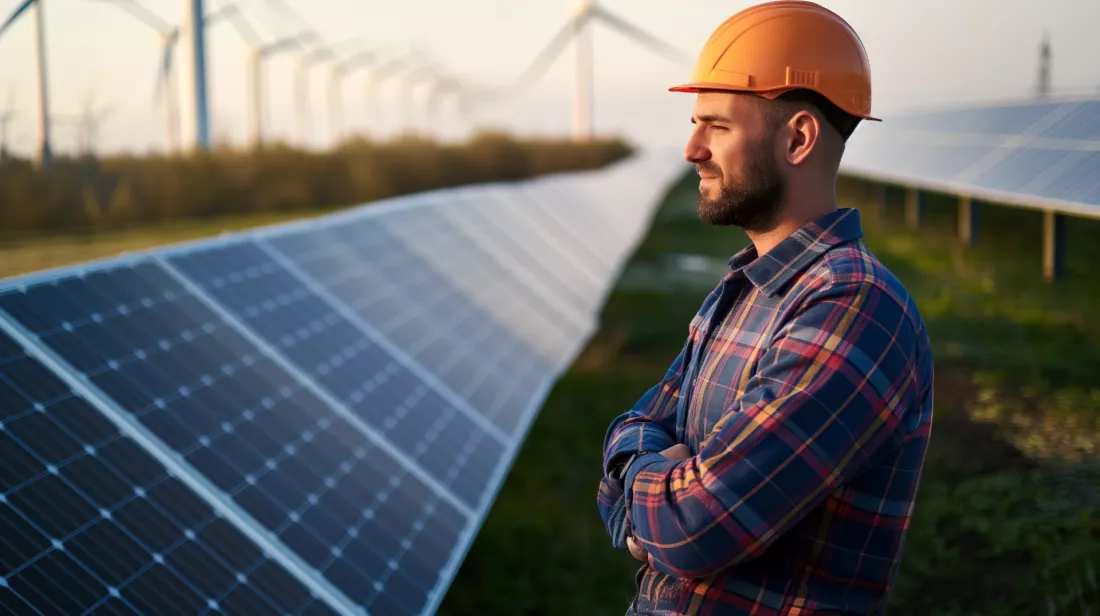
Sunshine and wind do not follow the schedules of electricity users: when the weather changes, so does the amount of power flowing into the grid. The EU-funded RESPONDENT project set out to reduce this uncertainty by combining data from Europe’s Copernicus and Galileo space programmes with readings from local weather stations, and put its platform to the test in Greece and Spain — and at the end you can check how well you understand the link between satellites and the grid.
Europe’s energy mix is moving away from fossil fuels and relies more and more on solar and wind power. That shift comes with a problem anyone who has watched a cloud drift across the sun can picture: the output of these plants follows the weather, not the needs of the people switching on the lights.
Nikolaos Zotos, CEO of the Greek telecom engineering company Future Intelligence, which coordinated the project, puts it this way: “With the shift to renewable energy sources such as solar and wind, which are highly weather-dependent, there is a lot of uncertainty in power generation.” For grid operators, that means balancing supply and demand at every moment without knowing for sure how much energy will arrive.
RESPONDENT was set up to turn data from Europe’s space programmes into practical tools: forecasting how much renewable energy will be available and managing electricity grids in real time. Its platform brings together two kinds of information. On one side are readings from local weather stations; on the other, data from Copernicus, the EU’s Earth observation programme.
“We combined satellite data with local weather stations to improve accuracy and better predict how much energy would actually be generated,” Zotos explains. The view from above and the measurements on the ground serve one purpose: estimating in advance how much electricity solar panels and turbines will really deliver.
The second space programme involved is Galileo, the EU’s satellite navigation system. Here, though, the point is not finding a route. RESPONDENT uses the precise timing that Galileo provides to synchronise measurements across the network.
The benefit is very concrete. When all the data run on the same clock, operators can spot problems early and deal with them before they grow. The result is a single platform that combines forecasting and monitoring in one system for grid operators and energy providers.
The platform was tested at two pilot sites. The first was the KIEFER photovoltaic park in Artemida, Greece. There, the team tested renewable generation forecasting across multiple installations managed through one platform rather than separate tools.
The second pilot, in Barcelona, had a different focus: grid monitoring. The system was evaluated at a substation and in a microgrid control system, where synchronisation based on Galileo was put to work on equipment connected directly to the electricity network. This was not a lab simulation but real installations under real operating conditions.
One figure sums up the tests: forecasting accuracy improved by 8–12% compared with existing approaches.
More reliable forecasts mean calmer grid management. With the platform, operators were able to:
Better synchronisation also made grid monitoring more reliable. In short, space data become a tool for everyday work: getting the right amount of energy to the right place at the right time.
Behind the technology is a consortium of eight partners from three countries: Greece, Ireland and Spain. The platform is now being prepared for integration into day-to-day operations. The next steps are to scale it up, test it on larger networks and make it available to more users.
Solar and wind power depend on the weather, which makes it hard to know how much energy will reach the grid. RESPONDENT combined Copernicus data with readings from local weather stations to forecast generation more accurately and used Galileo’s precise timing to synchronise measurements. At the two pilot sites, in Greece and Spain, forecasting accuracy rose by 8–12%, and operators could act earlier and keep the grid more stable.
5 questions · one minute


 EN
EN 
 CS
CS DE
DE ES
ES FR
FR HU
HU IT
IT PL
PL PT
PT РУ
РУ SK
SK TR
TR УК
УК AR
AR 中文
中文