
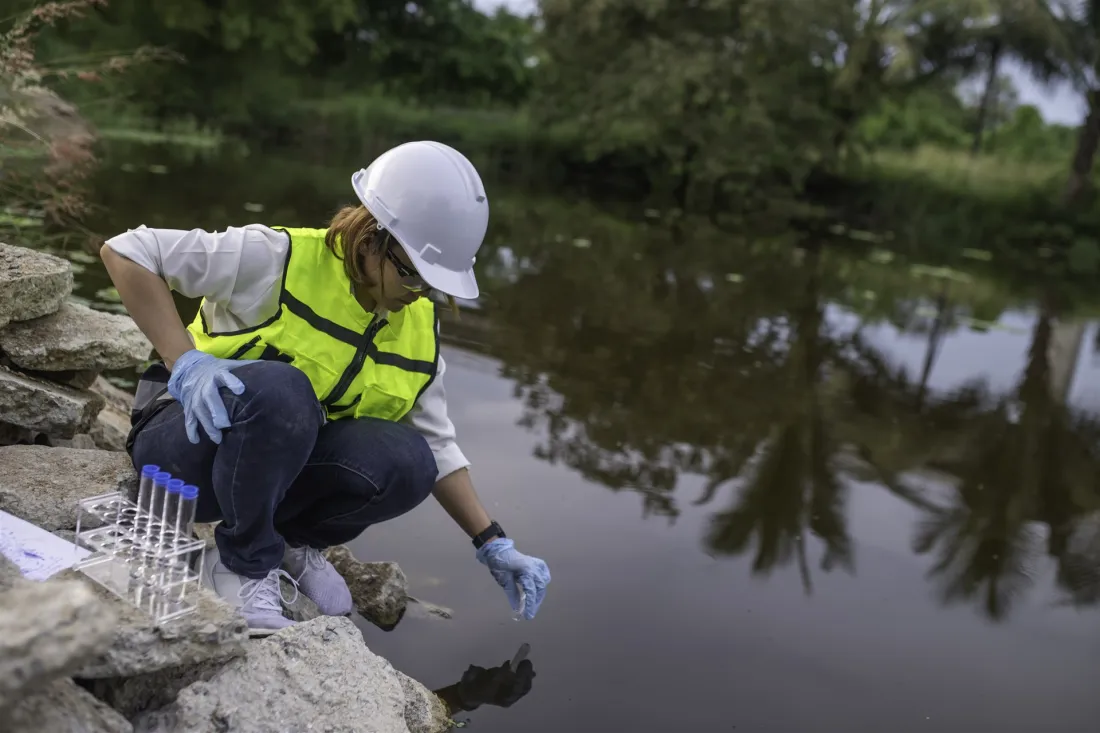
Droughts, heavy rainfall and emerging contaminants increasingly threaten the water we drink. Eight research projects funded by the Horizon Europe programme examined, in more than 35 case studies, how to protect groundwater and drinking water from the impacts of climate change. Find out what the scientists developed and which degree programmes lead to this kind of work, and at the end take a short test to check how much you remember.
Climate change affects both the quantity and the quality of the water resources used to produce drinking water. That is why the European Union funded eight research and innovation actions under the Horizon Europe programme, which developed ways to protect groundwater and the entire drinking water cycle. Their results are collected in a CORDIS Results Pack.
Climate change and water are closely connected. Erratic rainfall, melting ice sheets, rising sea levels, severe droughts and major floods are all impacts with water at their heart. Global demand is projected to outstrip available supplies by 40% before 2030. Our economy, our food and our daily lives rely on water, so Europe must prepare for water crises.
A warming climate degrades the quality of the sources used to produce drinking water. It increases the growth of pathogens, which are microorganisms that cause disease. Extreme weather worsens pollutant run-off into rivers and reservoirs, and this complicates water treatment, meaning the cleaning of water before it reaches our taps.
Groundwater is water that fills the cracks and pores in rock and soil beneath the surface of the earth. Layers of rock that store water and allow it to be extracted are called aquifers. Many towns and villages draw their drinking water from them, so their condition has a direct impact on human health.
Groundwater is under growing pressure from climate change and an altered environment. Prolonged drought and increasing water demand from various sectors can speed up the depletion of groundwater and worsen water scarcity. Heavy rainfall, flooding, sea-level rise and saline intrusion, in turn, can increase water-quality risks in vulnerable areas.
Alongside the impacts of climate change, human activity also affects water. Agriculture, urbanisation and other activities can introduce nutrients, for example from fertilisers, as well as pharmaceuticals, polyfluoroalkyl substances and other emerging contaminants into groundwater and other drinking water sources.
Polyfluoroalkyl substances, known by the acronym PFAS, are a group of chemical compounds used, among other things, in non-stick coatings, water-resistant fabrics and fire-fighting foams. They are sometimes called “forever chemicals” because they break down extremely slowly in the environment. Emerging contaminants, in turn, are substances whose effects on health and the environment are still being studied and which are not always covered by routine monitoring.
The projects covered the entire drinking water cycle and the management of groundwater resources. The teams studied pollution sources, pathways and impacts, and then deployed strategies to prevent and mitigate harm. Here is what each team worked on:
The researchers developed innovative monitoring networks, advanced modelling techniques and risk management strategies. These make it possible to implement early warning systems, improve water quality and protect the health of both humans and ecosystems. More than 35 distinct case studies expanded knowledge and the technological base of Europe, and also boosted the preparedness of the water sector for crises.
Before water reaches our taps, it is usually disinfected, for example with chlorine compounds, to destroy microorganisms. The disinfectant can, however, react with organic matter present in the water. Such reactions produce disinfection by-products, and their levels in drinking water must be controlled.
Two projects tackled this problem. The H2OforAll team monitored and treated disinfection by-products in the distribution systems through which water flows to consumers, while the intoDBP team created tools and strategies to control them. Thanks to this, disinfection can keep protecting against pathogens without degrading water quality in another way.
Managed aquifer recharge means deliberately introducing water into the ground to replenish groundwater resources. In this way, water can be stored for times of drought, or saline intrusion from the sea can be limited. There is one condition: the water put into the ground must be safe, otherwise instead of helping it will contaminate the resource for years.
The MAR2PROTECT team used a next-generation version of this method to prevent groundwater contamination. The UPWATER project developed monitoring and modelling techniques that make it possible to recharge aquifers with water safely. The NINFA team, in turn, combined monitoring, treatment technologies and risk assessment in studying groundwater pollution.
Fun fact: groundwater usually renews itself far more slowly than rivers and lakes. A contaminant that reaches an aquifer may therefore stay there for a very long time. That is why prevention and early warning matter so much in protecting groundwater, rather than cleaning up the damage afterwards.
The knowledge from the projects supports EU environmental legislation and the zero-pollution ambition of the European Green Deal. The data helps protect groundwater and drinking water consumers, and also advances the EU’s water resilience strategy. This is a roadmap designed to help Europe tackle the climate and economic pressures on water resources in the years to come.
Europe’s water sector already holds 40% of all worldwide water patents. It generates EUR 107 billion in revenue and employs 1.7 million people. The projects also created the ZeroPollution4Water Cluster, produced a series of policy briefs and an EU publication presenting an overview of the case studies and the monitoring and treatment technologies they tested.
Protecting drinking water brings together the exact, natural and technical sciences. Knowledge from several degree programmes comes in handy in such projects:
Climate change threatens both the quantity and the quality of drinking water and groundwater. Eight European projects under Horizon Europe developed monitoring networks, models and strategies that help detect threats early and protect human health. Researchers, policymakers and water utility companies can all benefit from their results.
5 questions · one minute


 EN

 CS
 DE
 ES
 FR
 HU
 IT
 PL
 PT
 РУ
 SK
 TR
 УК
 AR
 中文