Using deep learning, EU-backed scientists have developed a novel method that reliably assesses the quality of full-disk solar images.
Prof. Richard Horne was awarded the 2020 Kristian Birkeland Medal for outstanding results in the field of space weather and space climate.
EU project De-RISC has developed a first-version multiprocessor system-on-a-chip (MPSoC) platform, advancing on its objective to deliver to market a hardware/software platform based on RISC-V instruction set architecture.
Five European research and innovation projects received EUR 10 000 each for work that contributes to a better society.
Two firsts for the Europlanet Science Congress: This year, it’s going virtual and giving schools the chance to follow talks, attend workshops and ask questions online.
A new study has measured the masses of groups of white dwarfs in the Milky Way to determine their role as a key source of carbon – an element crucial to all life.
Andrew Fabian is awarded the Kavli Prize in Astrophysics by the Norwegian Academy of Science and Letters for his groundbreaking research in X-ray astronomy.
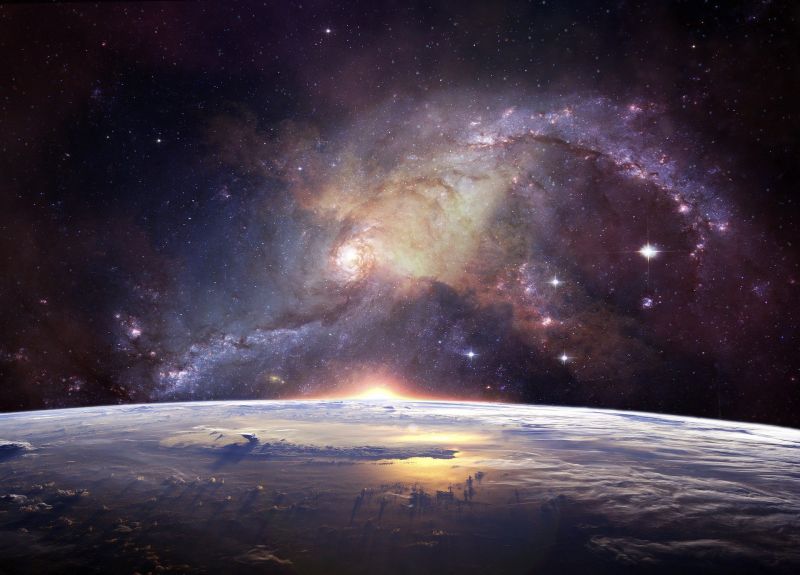
Can space-based telescopes quickly identify the atmospheric conditions of exoplanets similar to Earth? A new technique shows how.
New research suggests that hibernation is a likely option to make deep space exploration a reality.
Two American astronauts successfully complete the first all-women spacewalk.
Researchers have successfully tested cultivation processes in Antarctica. The greenhouse design concept will help human space exploration missions.
A new study claims that alien planets could have a greater variety of life than Earth.
It is arguably one of the biggest scientific announcements of the decade: the first ever image of a real black hole, causing celebrations not just amongst physicists and astronomers but across the world for a truly major breakthrough in advancing humanity’s understanding of the universe.
Researchers may soon be gaining greater insight into the cosmos’ most extreme phenomena with over 100 telescopes offering higher resolution, unparalleled accuracy and 10 times the sensitivity of current instruments.
One of our most popular special features in 2018 was issue 73’s focus on Europe’s efforts to take a active role in the world’s renewed interest in space exploration. In this month’s ‘Life After’, we reconnect with Dr Ann-Iren Kittang Jost, the coordinator of one of the projects showcased in that special feature, TIME SCALE, who updates us on her team’s efforts in developing innovative life support systems to enable the growth of crops and algae in a space-faring environment.
NASA plans to send a flying robot to Titan’s surface in the search for alien life.
African American women were behind the single most historic event of the 20th century.
A new map of the Milky Way reveals its strange twisted shape, far from flat as was believed till now.
Scientists have started testing novel graphene-based thermal management devices for space applications.
A new map of the Milky Way reveals its strange twisted shape, far from flat as was believed till now.


 EN
EN 
 CS
CS DE
DE ES
ES FR
FR HU
HU IT
IT PL
PL PT
PT РУ
РУ SK
SK TR
TR УК
УК AR
AR 中文
中文