
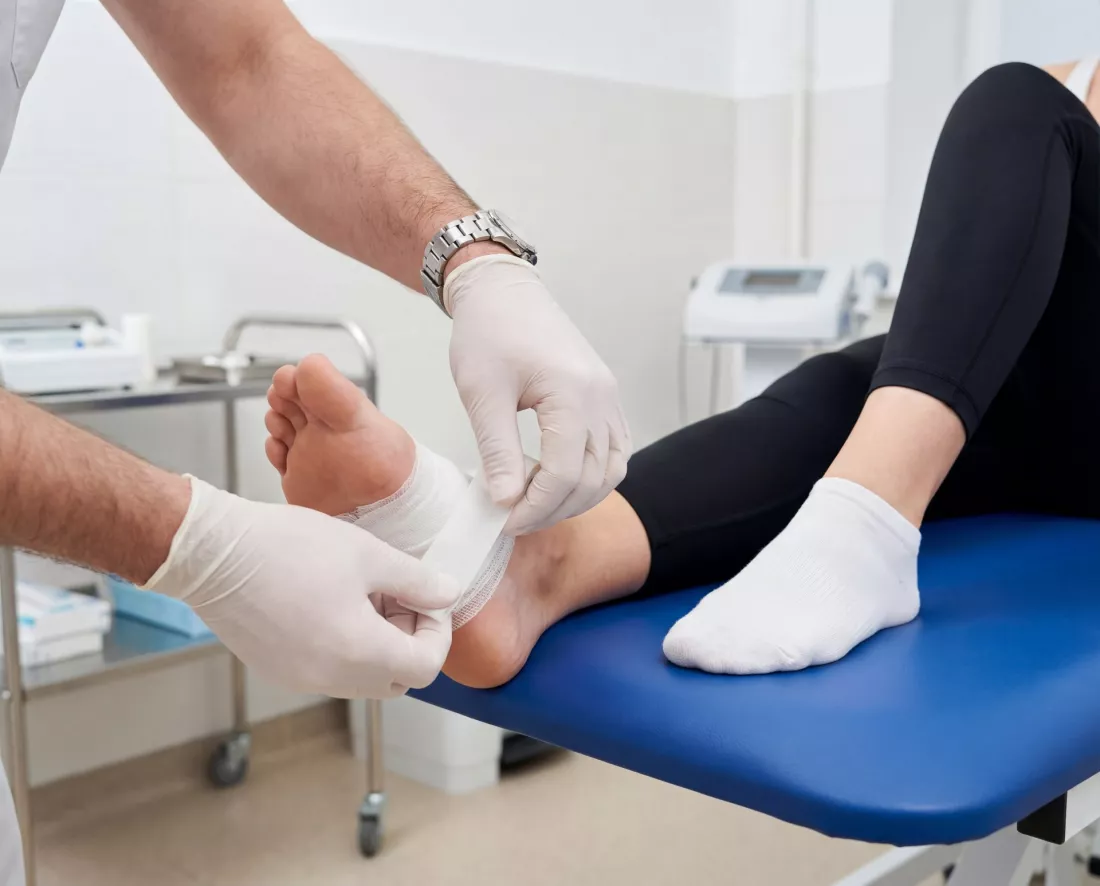
Diabetic foot ulcers affect about a quarter of the more than 800 million people with diabetes worldwide. Today they are mostly cleaned and dressed, which means treating the symptoms. The EU-funded APTADEGRAD project takes a different route: its compounds remove excess inflammatory proteins from the wound by recruiting the natural recycling system inside our cells – and at the end you can check whether you have a head for biotechnology.
Diabetic foot ulcers are one of the major complications of diabetes. These chronic wounds affect about a quarter of the more than 800 million people with diabetes worldwide. If not treated properly, they can lead to hospitalisation, limb amputation and even death.
The EU-funded APTADEGRAD project has developed a new therapy that could help such wounds heal. Its developers believe it has the potential to transform wound care and offer millions of patients a genuine cure rather than mere management of symptoms.
The mortality statistics are stark. Around 5 % of patients die within a year of developing diabetic foot ulcers, and after five years the figure rises to 42 %. Even so, current treatments involve simply cleaning and dressing the ulcers.
Juan Ruiz-Constantino, CEO of Lincbiotech, the Spanish biotechnology company coordinating the project, puts it plainly: “You are treating the symptoms, but you don’t have an approved drug for a disease-modifying approach.” APTADEGRAD therefore tackles the root of the problem: the inflammation that makes these chronic wounds so hard to heal.
Normally, inflammation is an ally: it helps fight infection and aids tissue repair. In diabetic wounds, however, some proteins accumulate to toxic levels and prevent the healing process from progressing. The main culprits are:
Existing antibody therapies can block these proteins, but they cannot remove them from the wound environment. That limits their effectiveness.
The answer of the APTADEGRAD team is a novel class of compounds known as lysosome-targeting chimeras, or LYTACs. Unlike antibodies, which merely block harmful proteins, LYTACs act as miniature delivery systems that actively remove them. The process works in a few steps:
The lysosome is the natural recycling centre of the cell. “The lysosomes are part of the quality control system we have inside our cells,” states Ruiz-Constantino.
By recruiting this internal waste disposal system, the therapy reduces protein levels in a controlled manner. It does not eliminate them entirely: it keeps enough proteins to support healing and restores a balanced inflammatory response.
Early results from the project have been very encouraging. In diabetic wound models, the LYTAC-based compounds accelerated healing and dampened inflammation. They often performed as well as or better than traditional antibody treatments.
For its trials, the team has developed two forms of the therapy. The first is an injection administered under the skin near the ulcers. The second is a hydrogel capable of gradual release directly onto the wound.
The immediate focus is diabetic foot ulcers, but the technology also holds promise for treating other chronic wounds and inflammatory diseases. The next major milestone is generating sufficient safety and efficacy data to support human clinical trials, which the researchers hope to commence around 2030.
Diabetic foot ulcers are a common and dangerous complication, and current care focuses on the symptoms. The APTADEGRAD project proposes LYTAC compounds that capture excess inflammatory proteins and send them to lysosomes to be broken down. In wound models, this sped up healing. Before the method can reach patients, it still needs to pass safety and efficacy studies.
5 questions · one minute


 EN
EN 
 CS
CS DE
DE ES
ES FR
FR HU
HU IT
IT PL
PL PT
PT РУ
РУ SK
SK TR
TR УК
УК AR
AR 中文
中文