
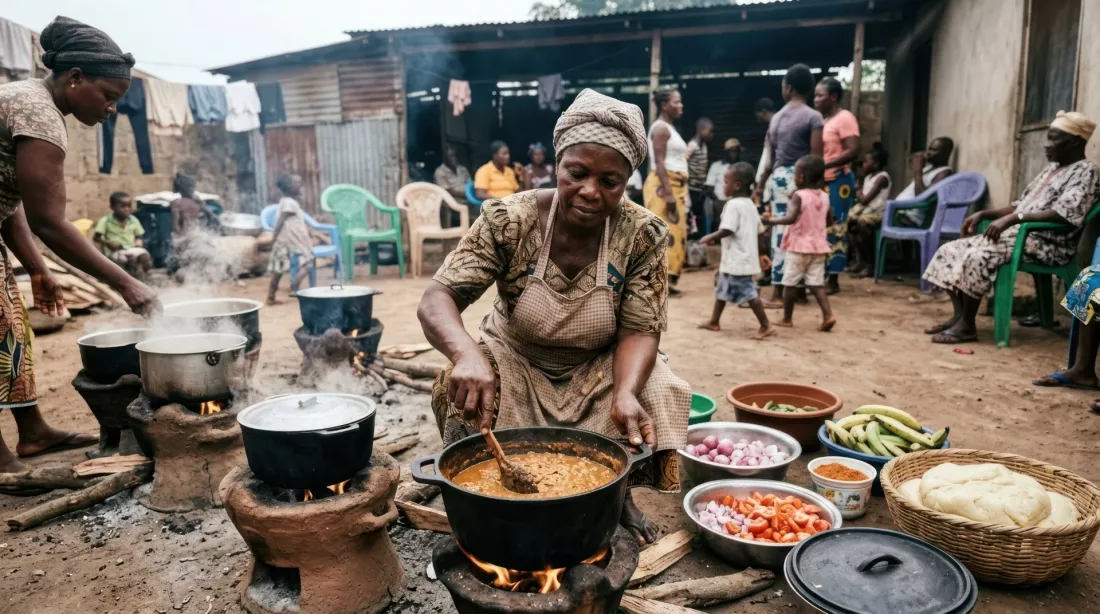
In Ethiopia, undernutrition persists while overweight and obesity are rising, especially among women in cities. For years the main response was nutrition education. The EU-supported TAMMIE project handed cameras to women themselves and combined their experiences with policy analysis. It found that money and time, rather than knowledge, stand in the way of healthy diets — and at the end you can check whether you see why this is a problem for the whole system.
Ethiopia, like many low- and middle-income countries, faces a double burden of malnutrition. Undernutrition persists while overweight and obesity are rising, particularly among women living in cities. Traditional approaches have focused mainly on undernutrition, using nutrition education and behaviour change as their main tools.
The TAMMIE project, supported by the Marie Skłodowska-Curie Actions, looked at this dual challenge as a whole. It explored the drivers the two problems share, community perspectives, existing policies and priorities, and the key stakeholders involved.
The research focused on the groups most vulnerable to malnutrition: women of reproductive age and children under five. Instead of relying on questionnaires alone, the team used PhotoVoice, a participatory photography method. Women documented their own experiences of feeding themselves and their families and proposed their own solutions.
“By treating women as partners in the research process rather than subjects of it, the project integrated lived experiences with scientific and policy evidence to develop recommendations that were both evidence-based and grounded in everyday realities,” explains Rebecca Pradeilles, who led the research from France’s National Research Institute for Sustainable Development and the International Food Policy Research Institute.
The most striking finding concerns the gap between programmes and reality. Many interventions assume that people simply lack information. The women in the study pointed instead to financial and structural barriers:
“The women in Addis Ababa consistently highlighted financial and structural challenges to adopting healthy diets, such as insufficient income and time constraints linked to unequal household responsibilities, particularly childcare,” says Pradeilles.
Their proposed solutions included more affordable healthy foods, community support mechanisms and policies regulating the promotion of unhealthy food. The barriers also varied by socioeconomic status, which means a single approach will not fit everyone.
The analysis showed that Ethiopia’s nutrition policies remain fragmented and focused mainly on undernutrition. The nutrition ecosystem involves government, donors, researchers and civil society, and it needs stronger collaboration. Stakeholders named three priorities: maternal nutrition, breastfeeding and nutrition-sensitive agriculture.
The key contribution of TAMMIE is to treat malnutrition as a systems problem. “The double burden of malnutrition in Ethiopia is driven by interconnected dietary, social, economic and institutional factors; thus, it must be addressed through multisectoral approaches with meaningful involvement of the people most affected in shaping solutions,” Pradeilles stresses.
The work is meant to feed directly into policy. “The project’s findings will inform the development of an intersectoral roadmap for tackling all forms of malnutrition in Ethiopia,” adds Kaleab Baye of Addis Ababa University, who collaborated on the project.
TAMMIE shows that what ends up on a plate depends not only on individual knowledge and choices, but also on income, time, conditions at home and the wider food environment. By making women partners in the research rather than mere respondents, the project identified barriers that an information campaign alone cannot remove.
5 questions · one minute


 EN
EN 
 CS
CS DE
DE ES
ES FR
FR HU
HU IT
IT PL
PL PT
PT РУ
РУ SK
SK TR
TR УК
УК AR
AR 中文
中文