Chicken feathers and solid remains of grapes are being used to develop eco-friendly materials, thanks to two EU-backed initiatives.
What do microplastic filters, fertilisers and fish feed have in common? They can all be produced using jellyfish! At least, that’s what one research team has set out to prove as they look into reducing the plastic waste in our oceans.
A team of researchers have proposed a new test that rapidly examines dogs for exposure to a parasite transmitted by sand flies. The test could be used in monitoring the effectiveness of sand fly control efforts.
Researchers have found a novel way to diagnose and manage patients with fever. How? Through new biomarkers that can tell the difference between bacterial and viral infection.
Scientists have discovered hundreds of genes involved in the development of diabetes and other metabolic diseases.
Tired, a few aches and pains, more interested in sitting comfortably by the fire than a wet walk in the woods? Dog or owner, staying mentally active at whatever age creates positive emotions and can slow down mental deterioration.
With the prevalence of allergy and asthma on the rise around the world, the race is on to explain this increase and stem the tide. A recent study finds a clue in an unlikely source… intestinal worms.
Referred to as ‘perplexing’, a group of North American Pleistocene horses have been identified, until now, as different species. Now mitochondrial and partial nuclear genomic studies support the idea that there was only one species, which belongs to a new genus.
Old adage? Urban myth? Either way the saying ‘You are never further than two metres from a rat’ tends to make people look around themselves nervously. Since our move into settlements first gave rats the environment they needed to thrive, we’ve been battling their numbers – for the most part unsuccessfully.
A study supported by the EU-funded SPACERADARPOLLINATOR project reveals the roles that visual experience, visual learning and foraging activity, have on the neural structure of bumblebees.
As most cities-dwellers know, urban environments offer both challenges and opportunities. But when it comes to birdlife, can telomeres provide an insight into which tips the balance?
Humans evolved their big heads to manage their complex social structures, an idea called the social brain hypothesis. Now a new study conducted by British and American researchers suggests that whale and dolphin brains evolved in much the same way.
European aquaculture production provides direct employment to 80 000 people and has an estimated EUR 3 billion annual turnover. But parasites can cause severe disease outbreaks leading to high economic losses in finfish aquaculture.
The ability of the crow family, corvids, to use tools and plan tactically to solve problems has fascinated many researchers from those studying self-recognition in magpies to the New Caledonian crow’s accurate crafting of tools. Now EU support has enabled a Swedish researcher to study ravens’ abilities to barter and plan.
New research part-supported by the EU-funded FLIACT project has shown that gut bacteria ‘speak’ to the brain to control food choices, identifying two specific species of bacteria that have an impact on animal dietary decisions.
War is not just a human activity. Costly group fights also break out between mongooses researchers have just found, with up to 30 animals on each side ‘arranged in battle lines’.
In the last Trending Science of 2016 (your writer will be ho ho home for the holidays by the time you read this), we’re reporting on three science-related Christmas stories that have hit the headlines this festive season.
Collaborative research funded by the ERC’s CACH project has announced the first real evidence that deep-sea animals are ingesting microplastics that are finding their way into the world’s oceans. This comes at a poignant moment as several governments are considering a ban on plastic microbeads, most often found in toiletries and cleaning products.
A new study has shown that individual mole rats perform different roles at different ages, and that age rather than caste behaviour accounts for the changes in their behaviour.
EU-funded researchers have examined new ways of rapidly detecting infectious pathogens - such as rabies and influenza - in order to prevent pandemics.
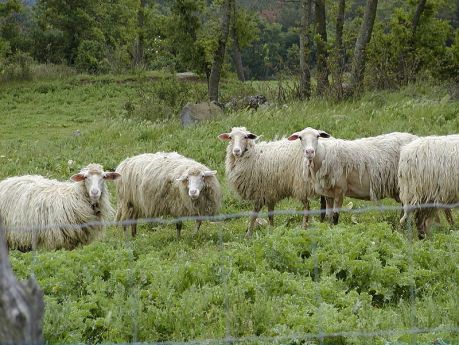
Tick-borne parasitic infections are common in small ruminants such as sheep, goats, deer and other related species. Through a combination of immunology, genomics and vaccinology, researchers from 11 countries investigated ways to improve existing vaccines and create new ones.

Although freshwater ecosystems provide countless services to humanity and support a rich biodiversity, they are at risk throughout the world. One of the main drivers of changes in freshwater ecosystems is biological invasions by non-native species, such as fish, resulting in major ecological and evolutionary impacts.

EU researchers are developing whole genome sequencing tools that can be used to manage and conserve genetic diversity in livestock.

Islands, with their distinct boundaries, act as natural laboratories for the study of evolution, biogeography and ecology. The Indo-Pacific region has the largest concentration of islands and archipelagos on the planet, making it the ideal place for testing these ideas.
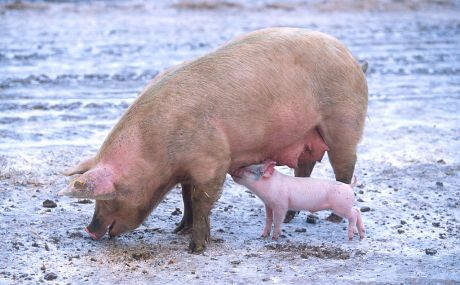
An EU-funded project has validated new technologies for reducing pathogen, reducing mortality and improving life-time growth performance, maternal immune transfer and meat quality in pig and poultry.


 EN
EN 
 CS
CS DE
DE ES
ES FR
FR HU
HU IT
IT PL
PL PT
PT РУ
РУ SK
SK TR
TR УК
УК AR
AR 中文
中文