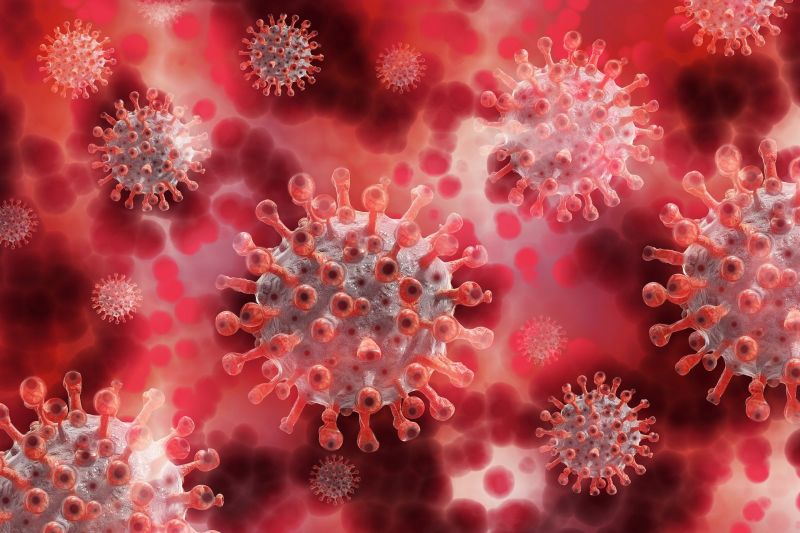
Critically ill COVID-19 patients suffer alterations in their tissue microcirculation associated with how severe the disease is, according to a new study. The results point to a type of non-obstructive coronary artery disease.
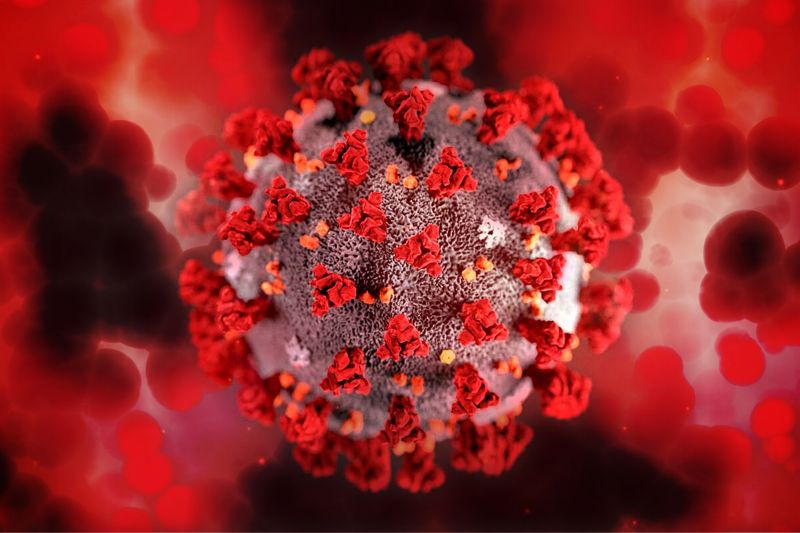
EU-backed scientists identify COVID-19 proteins that trigger strokes and heart attacks.
EU-backed scientists now know how certain proteins could potentially damage the body’s own cells.
EU-backed researchers are developing a trustworthy and secure platform where Europeans can safely share personal and industrial data.
Inspired by evolution, EU-backed researchers used a new approach based on evolutionary algorithms to help computer programs search for solutions to problems.
EU-backed researchers build state-of-the-art software that harnesses AI to design nanomedicine that fights cancer cells.
EU-backed project delivers fact sheets on the state of play of natural capital accounting (NCA) in 10 European countries.
Classical statistics or machine learning-based methods? EU-backed researchers perform the first objective comparison of conventional and new methods used to decode anomalous diffusion.
EU-backed scientists have successfully printed in 3D tiny gas sensors that mimic colour change mechanisms seen on peacocks. The sensors respond optically to traces of gas in homes, work settings and cars.
An EU-funded project is encouraging debate on responsible robotics to promote widespread social acceptance of AI-based robotic technologies in four key areas.
The antimicrobial resistance organisms are developing, and our bid to counter that with new ways of controlling them, is like an arms race – one we stand a better chance of winning if we use the antimicrobials that are still effective, more carefully.
A new study shows a link between the windborne iron aerosols from Australia’s 2019-2020 wildfires deposited in the Southern Ocean and the massive algal blooms observed there, raising new questions about oceanic carbon uptake.
An EU-backed team is developing an innovative photonics sensor for fast and reliable food safety monitoring in Europe’s fruit and vegetable production and distribution chains.
A new study has identified seven symptoms that, taken together, can improve detection of COVID-19 infection in the community.
Whether on a laptop or supercomputer, scientists investigating neural networks now have access to an enhanced brain simulator thanks to a digital pan-European research infrastructure.
Yearning for a book that looks, feels and smells like an ordinary book, but that you can also connect wirelessly to digital devices? Well, your wish may soon come true thanks to a Greek start-up backed by an EU-funded project.
Groundbreaking research into molecular construction has earned German chemist Benjamin List the 2021 Nobel Prize in Chemistry, making him the third EU-backed laureate this year.
Their pioneering work in complex physical systems has earned German climate modeller Klaus Hasselmann and Italian theoretical physicist Giorgio Parisi the prestigious Nobel Prize in Physics, which they share with US-based climatologist Syukuro Manabe.
A novel approach combining conventional white light with advanced photonics and optical imaging could help save up to 80 000 lives by helping doctors detect bowel cancer in the early stages.
Johnson & Johnson’s two-dose Ebola vaccine regimen produces a strong immune response in both children and adults, according to EU-funded researchers.


 EN
EN 
 CS
CS DE
DE ES
ES FR
FR HU
HU IT
IT PL
PL PT
PT РУ
РУ SK
SK TR
TR УК
УК AR
AR 中文
中文