A colossal solar storm played havoc on 19th century communications technology. Is our modern wired world even more vulnerable? We ask space physicist Minna Palmroth to make a forecast.
Astrophysicists have found barium in the upper atmospheres of two ultra-hot Jupiters hundreds of millions of light years away.
Can you plot a safe journey for a rover on the moon? An EU-backed project has issued three challenges aimed at both experts and novices to raise awareness of the scientific lunar exploration tools it is developing.
Scientists are discovering increasing numbers of planets in other galaxies that resemble our own. What gives them away? Expert Jérémy Leconte takes a look.
A newly discovered exoplanet orbiting a dwarf star nearly 100 light years away from Earth could be a water world, according to a new study.
Paving the way for more environmentally friendly materials in future electromechanical devices, EU-backed researchers have found a new way to induce the piezoelectric effect in materials ordinarily not considered to be piezoelectric.
A new study has confirmed the existence of a second asteroid sharing Earth’s orbit around the Sun. The asteroid is expected to remain in a stable orbit for the next 4 000 years.
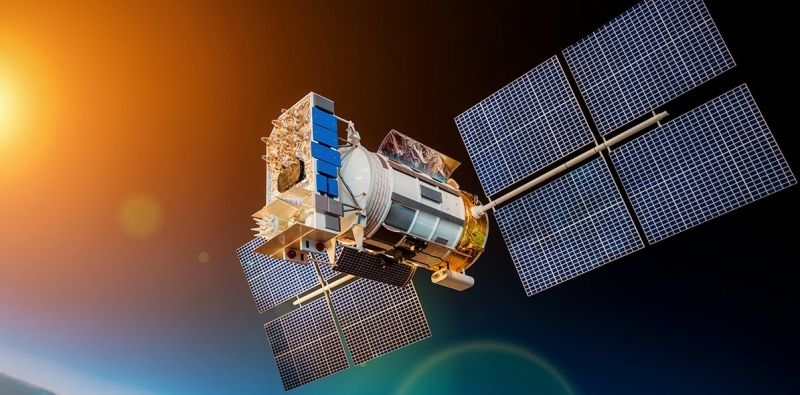
The EU-funded EROSS project has won the 2021 Étoiles de l’Europe award for its innovative satellite servicing technology.
The atmosphere of gas giant exoplanet TYC 8998-760-1 b is rich in carbon-13, according to EU-backed scientists.
Scientists have found evidence of clay minerals in the red planet’s Gale crater that indicate the presence of water under conditions that can support life.
An EU-funded study has analysed ways to improve forecasts of extreme rainfall events in the Mediterranean. It found that most occur in autumn in the west and in winter in the east.
SATLANTIS is an innovative SME that has made quite a name for itself in the space sector over the past few years. The reason for this is their groundbreaking iSIM satellite camera that, when we interviewed them for the March 2020 issue of Research*eu, had a very promising future. For this month’s ‘Life After’ feature, we reconnect with María Dasí, iSIM project coordinator to see how things have gone in the past year since we last spoke.
Europe has had two Horizon 2020-funded major collaborative networks for ground-based astronomy, the OPTICON and RadioNet projects. As RadioNet ended in December 2020 and OPTICON will officially close in June 2021, a major new project began in March 2021 and has formally brought the two networks together. This month, we stretch our editorial rules to the limit and shamelessly highlight all three projects as our Project(s) of the Month to commemorate this important milestone.
An EU-backed study has found that remote monitoring using satellites and drones could make nature-based solutions better able to protect communities from devastating natural hazards.
EU-funded researchers have published a comprehensive guide on the production and processing of graphene and related materials to promote their use in novel applications.
Using deep learning, EU-backed scientists have developed a novel method that reliably assesses the quality of full-disk solar images.
Prof. Richard Horne was awarded the 2020 Kristian Birkeland Medal for outstanding results in the field of space weather and space climate.
EU project De-RISC has developed a first-version multiprocessor system-on-a-chip (MPSoC) platform, advancing on its objective to deliver to market a hardware/software platform based on RISC-V instruction set architecture.
Five European research and innovation projects received EUR 10 000 each for work that contributes to a better society.
Two firsts for the Europlanet Science Congress: This year, it’s going virtual and giving schools the chance to follow talks, attend workshops and ask questions online.


 EN
EN 
 CS
CS DE
DE ES
ES FR
FR HU
HU IT
IT PL
PL PT
PT РУ
РУ SK
SK TR
TR УК
УК AR
AR 中文
中文